
Description
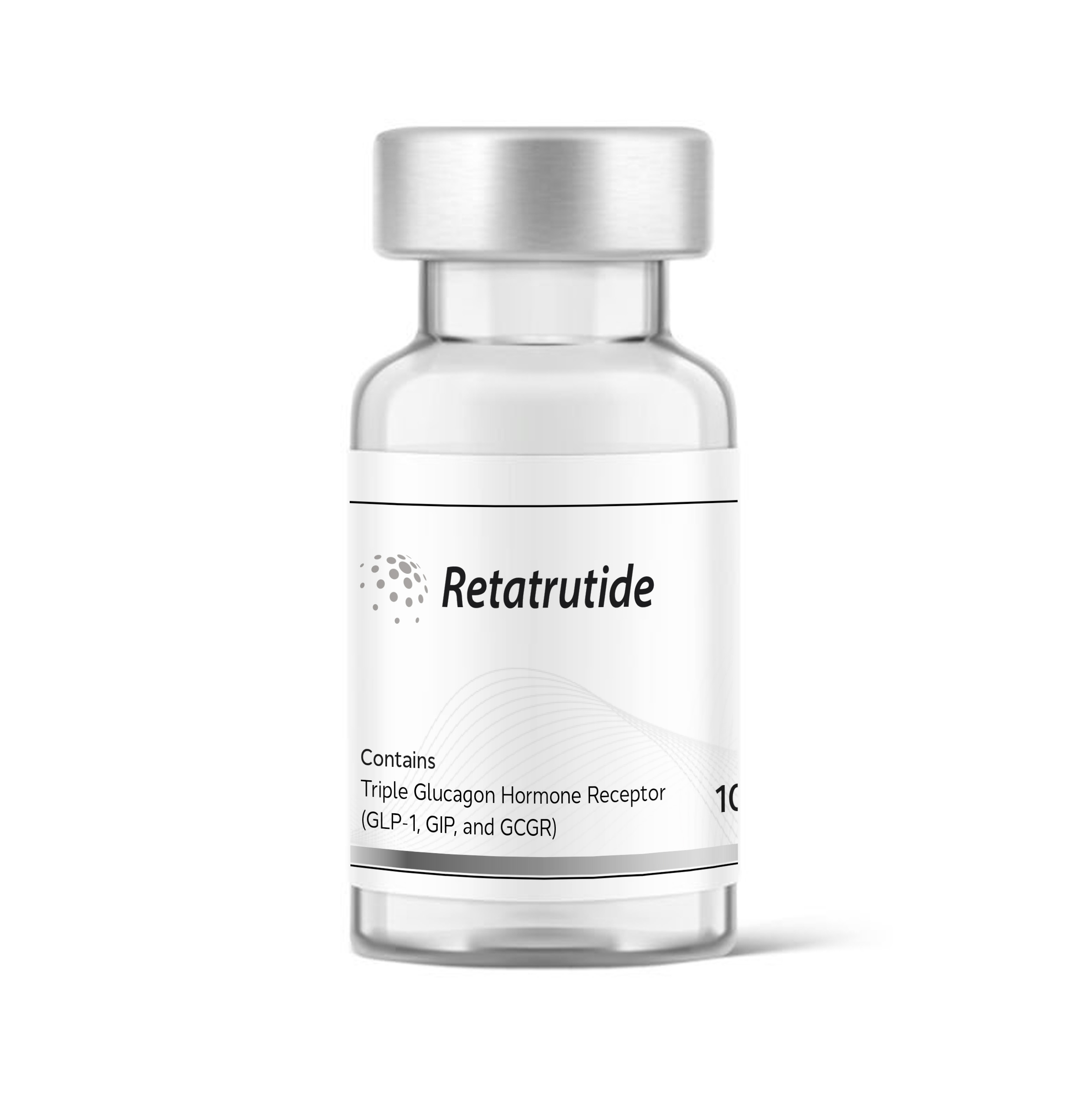
Retatrutide
| Benefit | Key take-aways |
|---|---|
| 1 Unprecedented weight loss | Phase 2 obesity cohorts reported ~20–25% mean body-weight reduction at 48 weeks on higher doses, with curves still trending down—exceeding typical GLP-1 and even dual GIP/GLP-1 results. |
| 2 Potent glycaemic control | In type 2 diabetes, A1c reductions approaching ~2% with parallel fasting-glucose and post-prandial improvements; many participants reach A1c <7% without rescue therapy. |
| 3 Liver-fat & MASH signals | Marked MRI-PDFF decreases and ALT/AST improvements suggest meaningful NAFLD/MASHactivity, consistent with glucagon-mediated hepatic lipid mobilization plus weight loss. |
| 4 Cardiometabolic risk profile | Triglycerides fall, HDL rises modestly, and non-HDL/apoB trend down; blood pressure often drops ~6–10/3–5 mmHg with waist-circumference shrinkage. |
| 5 Higher energy expenditure | Human calorimetry and preclinical data show ↑ resting energy expenditure and fat oxidation, attributed to glucagon receptor activation—countering adaptive metabolic slowdown. |
| 6 OSA & mobility | Large weight loss translates to improved AHI (sleep apnea) and better functional capacity/painmarkers in obesity substudies. |
| 7 Early β-cell/insulin-sparing effects | GIP/GLP-1 synergy improves first-phase insulin and glucose-dependent control, allowing de-intensification of other diabetes meds in some participants. |
| 8 Visceral-fat and ectopic-fat reduction | Imaging (DXA/MRI) indicates preferential loss of visceral and hepatic fat, key for cardiometabolic risk modification. |
| 9 Quality of life | Meaningful improvements in satiety, cravings, physical function, and PROs accompany weight/metabolic change. |
2. Molecular Mechanism of Action
2.1 Receptor Pharmacodynamics
-
GLP-1R: ↓ appetite, ↓ gastric emptying, ↑ glucose-dependent insulin, ↓ glucagon (post-prandial).
-
GIPR: Amplifies insulin secretion, may enhance adipocyte metabolic flexibility and GI tolerability with GLP-1.
-
GCGR (glucagon): ↑ energy expenditure and fat oxidation; hepatic lipid mobilization and anti-steatotic effects; modest ↑ hepatic glucose output that is counter-balanced by GLP-1/GIP glycaemic control.
2.2 Down-stream Biology
| Pathway | Functional outcome | Context |
|---|---|---|
| POMC/AgRP (hypothalamus) | Satiety ↑, cravings ↓ | CNS appetite circuits |
| Islet (GLP-1/GIP) | Glucose-dependent insulin ↑, β-cell stress ↓ | Pancreas |
| Hepatic lipid handling (GCGR) | TG export/oxidation ↑, steatosis ↓ | Liver |
| Brown/white adipose | Thermogenesis/FAO programs ↑ | Adipose tissue |
| CV-renal | BP ↓, natriuresis signals ↑ (weight-mediated + direct) | Vascular/renal |
3. Pharmacokinetics
-
Route: Once-weekly SC injection with dose-escalation to improve GI tolerability.
-
Absorption/half-life: Engineered for multi-day half-life (~1 week) supporting weekly dosing.
-
Distribution/clearance: Albumin-binding/acylation prolong exposure; peptide catabolism via proteases; renal/hepatic clearance of fragments.
-
Food interactions: Not clinically relevant (injected).
4. Pre-clinical and Clinical Evidence
4.1 Obesity (without diabetes)
Dose-ranging Phase 2 showed large, dose-dependent weight loss through 48 weeks, with a majority of participants achieving ≥15% and many ≥20% loss. Trajectories suggested additional loss with continued therapy.
4.2 Type 2 Diabetes
Retatrutide produced robust A1c and weight reductions vs placebo/active comparators, improving fasting/post-prandial glucose, time-in-range (CGM), lipids, and BP. Hypoglycaemia was uncommon outside insulin/sulfonylurea co-use.
4.3 NAFLD/MASH
Meaningful MRI-PDFF reductions and enzyme improvements occurred early, consistent with dual weight-dependent and glucagon-mediated effects; histology programs are ongoing.
Evidence quality note: Data to date are Phase 2 (plus expanding Phase 3 programs). Magnitudes above are representative of published results; long-term outcomes (CV events, MASH histology, hard renal endpoints) are pending.
5. Emerging Clinical Interests
| Field | Rationale | Status |
|---|---|---|
| Obesity (broad BMI ranges) | Superior weight loss potential | Phase 3 |
| T2D (mono/combination therapy) | Strong A1c + weight effects | Phase 2→3 |
| MASH/NAFLD | Liver-fat and fibrosis pathways | Ongoing trials |
| OSA | Weight-linked AHI improvement | Exploratory |
| HFpEF with obesity | Weight/BP/VO₂ & congestion signals | Concept |
| PCOS/metabolic syndrome | Weight, insulin resistance, ovulatory milieu | Exploratory |
6. Safety and Tolerability
-
Common (dose-related, typically early): Nausea, vomiting, diarrhea/constipation, abdominal pain, transient decreased appetite; generally manageable with gradual titration.
-
Vitals/labs: Modest HR increase (few bpm); BP decreases; ALT/AST usually fall with weight/liver-fat loss.
-
Gallbladder: Risk of cholelithiasis/cholecystitis rises with rapid weight loss—monitor symptoms.
-
Pancreas: Pancreatitis is rare; counsel on symptoms and stop if suspected.
-
GI motility: Gastroparesis/aspiration risk around anesthesia—follow peri-procedural fasting guidance.
-
Hypoglycaemia: Uncommon without insulin/secretagogues; adjust those doses as weight and glycaemia improve.
-
Thyroid C-cell warning (class/rodent): GLP-1–based agents carry a rodent C-cell tumor signal; avoid with personal/family history of MTC or MEN2 pending specific label data.
-
Contraindications/caution: Pregnancy/breastfeeding, severe GI disease, active gallbladder disease, pancreatitis history—use specialist judgement.
Comparative safety matrix
| Feature | Retatrutide (GLP-1/GIP/GCGR) | Tirzepatide (GLP-1/GIP) | Semaglutide (GLP-1) |
|---|---|---|---|
| Weight loss (48–72 wks) | Very high (≥20% avg at upper doses, Phase 2) | High (≈15–22%) | High (≈12–17%) |
| A1c lowering | ~2% (T2D) | ~2–2.5% | ~1.5–2% |
| Energy expenditure | ↑ (glucagon) | Neutral–mild | Neutral |
| GI tolerability | GLP-1-like; titration key | GLP-1-like; improved vs GLP-1 alone | GLP-1-class |
| HR/BP | HR ↑ small; BP ↓ | Similar | Similar |
| NAFLD/MASH | Strong signals | Strong | Strong |
7. Regulatory Landscape
-
Programs: Late-phase obesity and diabetes trials underway; liver-disease programs expanding.
8. Future Directions
-
Cardiovascular-outcomes trial (CVOT) to quantify MACE reduction and renal protection.
-
Histology-based MASH trials (NASH resolution, fibrosis endpoints).
-
Body-composition & function: DXA/MRI (visceral/ectopic fat, lean-mass preservation), strength/VO₂.
-
Dose-finding/titration science to balance maximal efficacy with GI tolerability.
-
Combination strategies (e.g., statins, SGLT2 inhibitors) and peri-procedural protocols (aspiration risk mitigation).
-
Patient-reported outcomes on satiety, cravings, and QoL to guide shared decisions.