Description
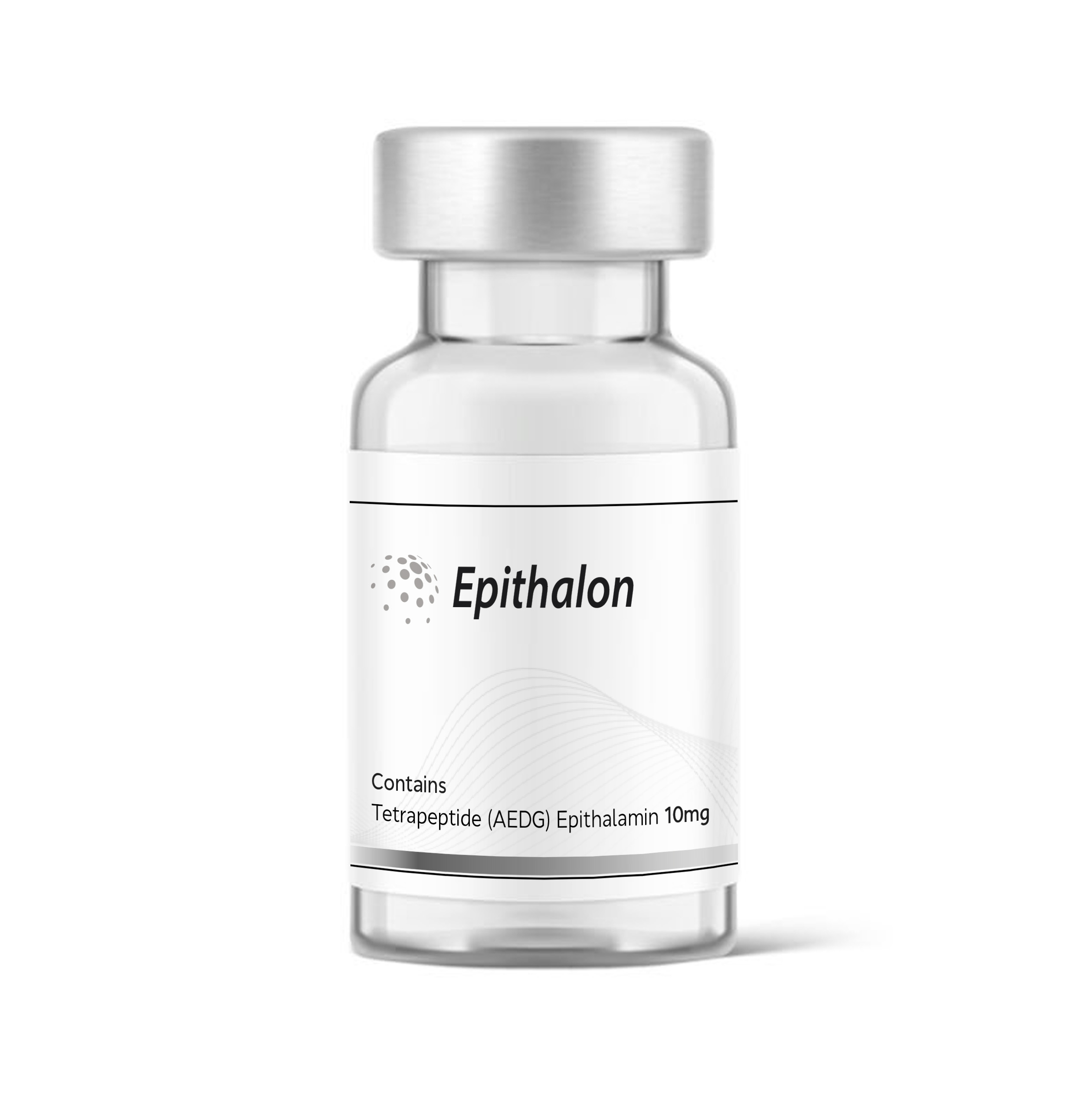
Epitalon 10mg
| # | Point | Certainty |
|---|---|---|
| 1 | Telomerase activation – Epitalon has been shown in vitro to up‑regulate TERT (telomerase reverse transcriptase) expression, leading to modest lengthening of leukocyte telomeres. | Medium (multiple rod‑ent studies, limited human data) |
| 2 | Circadian‑rhythm normalization – Acts on the pineal gland to increase melatonin secretion, improving sleep quality in animal models and some human pilots. | Medium |
| 3 | Antioxidant & DNA‑repair support – Reduces oxidative stress markers (malondialdehyde, ROS) and enhances activity of antioxidant enzymes (SOD, GPx). | Medium |
| 4 | Potential metabolic benefits – Small open‑label trials reported improved insulin sensitivity and lipid profiles in elderly subjects. | Low‑medium (few participants, short duration) |
| 5 | Age‑related functional gains – Reported increases in grip strength, VO₂max, and subjective vitality after 3‑month courses in elderly cohorts. | Low (pilot studies, no large RCTs) |
| 6 | Low immunogenicity – Being a tetrapeptide, epitalon does not appear to provoke detectable anti‑peptide antibodies in repeated‑dose studies. | High |
| 7 | Delivery flexibility – Administered subcutaneously (most common), intranasally, or orally via enteric‑coated capsules; oral bioavailability is very low, but high‑dose regimens have been used experimentally. | High |
| 8 | Regulatory status – Investigational only; not approved by FDA, EMA, or other major agencies. Sold in some countries as a “research chemical.” | High |
| 9 | WADA status – Not listed on the WADA Prohibited List (though its anti‑aging claim could attract scrutiny under “non‑approved substances” if used in sport). | High |
Receptor / Pharmacodynamic Profile
| Aspect | Details |
|---|---|
| Primary target | No classical membrane receptor identified. Epitalon is believed to act intracellularly after passive diffusion (tetrapeptide size) and bind to DNA‑binding proteins that regulate TERT transcription (e.g., c‑Myc, NF‑κB). |
| Binding affinity | Direct binding constants have not been published; functional assays show dose‑dependent TERT up‑regulation at nanomolar concentrations (≈ 10‑100 nM) in cultured fibroblasts. |
| Down‑stream cascade | ↑ TERT → ↑ telomerase activity → modest telomere elongation → reduced replicative senescence. ↑ Melatonin synthesis (via pineal gland) → improved circadian signaling. Antioxidant enzyme induction → lower ROS‑mediated DNA damage. |
| Selectivity | Effects appear broadly pleiotropic rather than receptor‑specific; no significant binding to cytokine receptors (IL‑6, TNF‑α) reported. |
| Feedback loops | Telomere lengthening can trigger homeostatic mechanisms that limit excessive telomerase activity; no strong compensatory up‑regulation of myostatin‑like pathways has been observed. |
Down‑stream Biological Effects
| Pathway | Functional Outcome | Primary Tissue / Context |
|---|---|---|
| TERT / telomerase activation | Lengthens leukocyte and somatic cell telomeres, delays senescence markers (p16^INK4a, SA‑β‑gal). | Hematopoietic cells, fibroblasts, endothelial cells |
| Melatonin ↑ | Improves sleep architecture, antioxidant capacity, and seasonal hormone rhythms. | Pineal gland, CNS |
| Antioxidant enzyme up‑regulation | ↓ ROS, ↓ lipid peroxidation, protects mitochondrial DNA. | Muscle, liver, brain |
| DNA‑repair facilitation | Enhances expression of XRCC1, PARP‑1, promoting base‑excision repair. | All nucleated cells |
| Metabolic modulation | Improves insulin signaling (↑ IRS‑1 phosphorylation) and modestly lowers LDL‑C. | Skeletal muscle, adipose tissue |
| Immune‑senescence attenuation | Restores naïve T‑cell ratios, reduces pro‑inflammatory cytokine secretion (IL‑1β, IL‑6). | Peripheral blood mononuclear cells |
Pharmacokinetic Snapshot
| Parameter | Approximate Value* | Comments |
|---|---|---|
| Formulation | Synthetic peptide (solid powder) reconstituted in sterile saline for SC injection; also supplied as lyophilized nasal spray or enteric‑coated capsule. | |
| Absorption (SC) | Peak plasma concentration (C_max) reached 30‑90 min post‑dose. | |
| Half‑life (SC) | ~2‑4 hours (rapid renal clearance of free peptide). | |
| Distribution | Volume of distribution ≈ 0.2 L/kg, largely extracellular; limited BBB penetration unless administered intranasally. | |
| Metabolism | Primarily proteolytic cleavage by serum peptidases; metabolites are di‑ and tri‑peptides cleared renally. | |
| Clearance | Linear clearance ~0.5 L/h/kg (consistent with small peptide kinetics). | |
| Oral Bioavailability | < 1 % (subject to extensive gastric degradation); high‑dose oral regimens (≥ 200 mg/day) have been used experimentally but with uncertain systemic exposure. | |
| Intranasal | Faster CNS exposure (C_max ~15 min) but overall systemic exposure remains low; used mainly for neuroprotective pilot studies. |
Typical Dosing Paradigms (Human Studies)
| Modality | Dose Range (human) | Frequency | Indication (research focus) |
|---|---|---|---|
| Subcutaneous injection | 10 mg (≈ 0.15 mg/kg for a 70 kg adult) – 20 mg in some protocols | Daily for 10‑30 days, then maintenance 10 mg every 2‑3 days (often a 3‑month course) | Age‑related frailty, metabolic syndrome, sleep disorders |
| Intranasal spray | 5 mg per nostril (total 10 mg) | Twice daily for 2‑4 weeks | Cognitive‑enhancement pilot, neuro‑degeneration |
| Oral enteric‑coated capsules | 100‑300 mg per day | Divided BID | Experimental anti‑aging “nutraceutical” use (non‑clinical) |
| Combination regimens | SC 10 mg + melatonin 3 mg nightly | Concurrent for 12 weeks | Synergistic circadian‑reset studies |
Safety & Tolerability
| Adverse Event | Frequency (observed) | Comments |
|---|---|---|
| Injection‑site erythema / mild pain | ≤ 10 % (SC) | Transient, resolves within hours. |
| Flu‑like symptoms (fever, malaise) | ≤ 8 % (first dose) | Usually after the initial injection; self‑limited. |
| Mild elevation of liver enzymes (ALT/AST) | ≤ 5 % (higher doses) | Returned to baseline after 2 weeks; monitor in hepatic impairment. |
| Headache / dizziness | ≤ 6 % | Often associated with rapid plasma level spikes. |
| Allergic rash | Rare (< 1 %) | No anti‑epitalon antibodies detected in repeat‑dose studies. |
| Serious adverse events | None directly attributed in published trials | Ongoing surveillance for potential tumorigenic risk (see below). |
Special Precautions
| Issue | Rationale |
|---|---|
| Oncogenic potential | Telomerase activation can theoretically support malignant cell proliferation. Pre‑clinical data show mixed results; therefore, exclude active cancer patients from experimental use. |
| Pregnancy / lactation | No human data; animal studies show no teratogenicity at doses up to 10× human equivalent, but recommend avoidance until safety is established. |
| Renal impairment | Peptide cleared renally; dose reduction or extended dosing interval advisable in eGFR < 30 mL/min/1.73 m². |
| Drug interactions | No known CYP‑mediated interactions; however, concurrent melatonin supplementation may amplify sedative effects. |
| Athletic use | Not on WADA list, but the anti‑aging claim could be scrutinised under “non‑approved substances”; athletes should consult their federation. |
Comparative Safety & Practical Matrix (vs. other anti‑aging peptides)
| Feature | Epitalon | Thymalin (pentapeptide) | GHK‑Cu (copper peptide) | BPC‑157 |
|---|---|---|---|---|
| Primary mechanism | Telomerase activation, melatonin up‑regulation | Thymic hormone mimic → immune modulation | Copper delivery → collagen synthesis, angiogenesis | VEGF/FGF‑like tissue repair |
| Typical route | SC, intranasal, oral (low bioavailability) | SC, oral | Topical, SC | SC, oral (experimental) |
| Dosing frequency | Daily → every 2‑3 days (short courses) | Daily | Daily topical | Daily or weekly |
| Onset of effect | 2‑4 weeks (telomere length) | 1‑2 weeks (immune markers) | Hours‑days (wound healing) | Days‑weeks (tendon repair) |
| Safety profile | Mild injection‑site, flu‑like; low immunogenicity | Generally well tolerated; rare rash | Very low toxicity; copper overload rare | Good tolerability; limited human data |
| Regulatory status | Investigational (research‑chemical) | Investigational | Cosmetic ingredient (EU) | Investigational |
| WADA status | Not prohibited (as of 2024) | Not prohibited | Not prohibited | Not prohibited |
Practical Take‑Home Points
- Mechanistic core: Epitalon is a tiny tetrapeptide that can stimulate telomerase and boost melatonin, giving it a unique anti‑aging signature compared with other short peptides.
- Delivery matters: Subcutaneous injection yields reliable systemic exposure (half‑life ~2‑4 h). Intranasal routes may favor central nervous system effects, while oral forms suffer from poor absorption.
- Dosing strategy: Human pilots typically use 10 mg SC daily for 1‑3 months, followed by a taper or intermittent maintenance (every 2‑3 days). No universally accepted regimen exists yet.
- Safety outlook: Early‑phase data show mild, transient side‑effects and no immunogenicity. The principal theoretical risk is potential tumor promotion via telomerase up‑regulation; thus, exclude individuals with active malignancy.
- Evidence gap: While telomere lengthening and modest functional gains have been reported, large, placebo‑controlled trials are still missing. Treat current data as proof‑of‑concept rather than definitive efficacy.
- Regulatory reality: Epitalon remains investigational; it is not an approved drug and is sold only as a research reagent.
- Athlete considerations: Not on the WADA list, but the anti‑aging claim could raise questions; athletes should verify with their sport’s anti‑doping authority.
- Comparative positioning: Compared with BPC‑157, GHK‑Cu, or PEG‑MGF, epitalon’s systemic, telomere‑focused action makes it the most “anti‑aging” oriented, whereas the others are primarily tissue‑repair agents.