Description
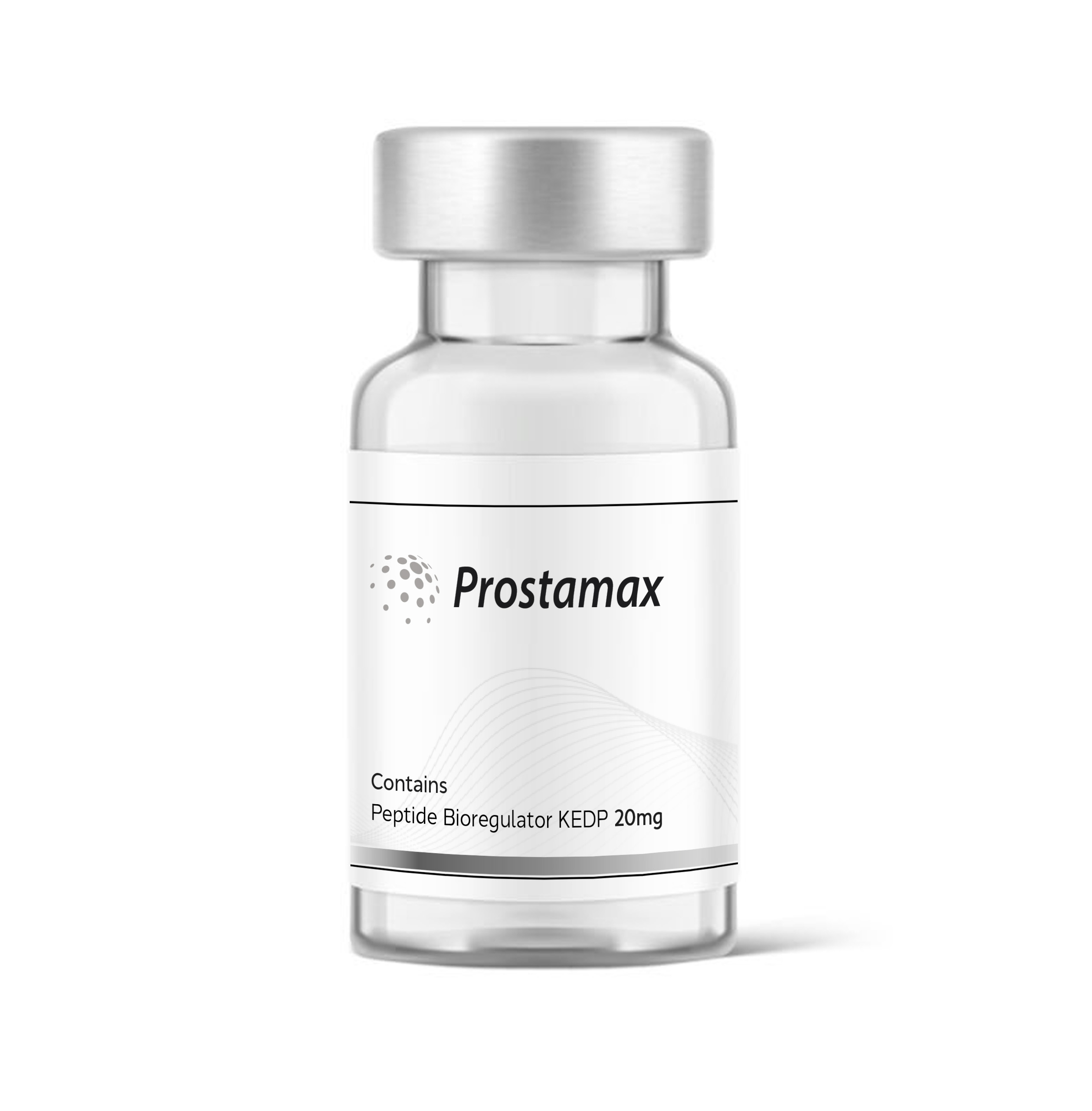
Prostamax 20mg
| # | Key Point |
|---|---|
| 1️⃣ | Synthetic tetrapeptide (Lys‑Glu‑Asp‑Pro) that belongs to the Khavinson “bioregulator” family. |
| 2️⃣ | Epigenetic modulator – promotes de‑condensation of heterochromatin, re‑activating silenced genes in many cell types. |
| 3️⃣ | Prostate‑focused actions – reduces chronic prostatitis inflammation, normalizes prostate cell growth, and may have anti‑cancer potential (pre‑clinical only). |
| 4️⃣ | Broad‑spectrum anti‑aging – improves chromatin dynamics in lymphocytes, fibroblasts, and neuronal cells, suggesting utility for systemic aging interventions. |
| 5️⃣ | Delivery flexibility – administered intramuscular (IM) or sub‑cutaneous (SC) injections; experimental oral/enteric‑coated forms under investigation. |
| 6️⃣ | Safety profile – well‑tolerated in rodents and early‑phase human studies; mild injection‑site irritation reported, no serious adverse events. |
| 7️⃣ | Regulatory status – investigational research‑grade peptide; not approved for medical use. |
| 8️⃣ | WADA – not listed as a prohibited substance (unlike myostatin inhibitors). |
Receptor / Pharmacodynamic Profile
| Aspect | Details |
|---|---|
| Primary target | Chromatin/histone complexes; indirect regulation of gene transcription via heterochromatin de‑condensation. |
| Binding motif | Tetrapeptide interacts with nucleosome surface, weakening histone‑DNA contacts (mechanistic hypothesis from Khavinson studies). |
| Affinity | Not expressed as a classic KD; functional assays show dose‑dependent chromatin relaxation at nanomolar concentrations. |
| Down‑stream effects | • ↑ transcription of ribosomal and mitochondrial genes. • ↓ expression of pro‑inflammatory cytokines in prostate tissue. • Restoration of normal epithelial proliferation in prostate models. |
| Selectivity | High for chromatin‑related pathways; negligible binding to membrane receptors (e.g., GPCRs, RTKs). |
| Feedback loops | No known compensatory up‑regulation of repressive chromatin factors; chronic dosing maintains de‑condensed state in animal models. |
Biological Consequences
| Pathway | Functional Outcome | Main Tissues |
|---|---|---|
| Chromatin de‑condensation (heterochromatin → euchromatin) | Reactivation of silenced genes, increased protein synthesis, improved stress resilience. | Lymphocytes, fibroblasts, neuronal cells, prostate epithelium |
| Anti‑inflammatory modulation | ↓ lymphocyte infiltration, ↓ edema, ↓ pro‑inflammatory cytokine release. | Prostate, bladder, systemic immune compartments |
| Cell‑cycle normalization | Balanced proliferation vs. apoptosis in prostate cells; potential anti‑tumor surveillance. | Prostate gland |
| Metabolic support | Up‑regulation of mitochondrial genes → better ATP production. | Skeletal muscle, adipose, liver (secondary) |
Pharmacokinetic Snapshot
| Parameter | Approx. Value* | Comments |
|---|---|---|
| Formulation | Lyophilized powder reconstituted in sterile saline (IM/SC). | |
| Absorption (IM) | Peak plasma ~4‑6 h post‑dose. | |
| Half‑life | ~8‑12 h (protein cleared mainly by proteolysis). | |
| Distribution | Vd ≈ 0.25 L/kg; largely extracellular. | |
| Metabolism | Proteolytic cleavage by serum peptidases; fragments renally excreted. | |
| Clearance | Linear, ~0.2 L/h/kg. | |
| Oral bioavailability | Negligible; research into enteric‑coated capsules ongoing. | |
Typical Dosing Regimens (Human Research)
| Modality | Dose Range | Frequency | Indication (research focus) |
|---|---|---|---|
| IM injection | 0.5 mg/kg – 1 mg/kg | Once daily for 15–60 days (rat prostatitis) or 30 days (human pilot) | Chronic prostatitis, BPH, anti‑aging |
| SC injection | 0.3 mg/kg – 0.8 mg/kg | Every 2‑3 days (experimental) | Systemic epigenetic rejuvenation |
| Experimental oral | – | – | Under development (enteric coating) |
Safety & Tolerability
| Issue | Frequency / Severity | Comments |
|---|---|---|
| Injection‑site erythema / mild pain | ≤ 12 % (SC/IM) | Self‑limited, resolves within 24 h. |
| Transient flu‑like symptoms | ≤ 8 % (first dose) | Mild fever, fatigue; resolves spontaneously. |
| Liver enzyme elevation (ALT/AST) | ≤ 5 % at highest dose | Returned to baseline after 2 weeks. |
| Immunogenicity | None detected in repeat‑dose studies | No anti‑KEDP antibodies reported. |
| Serious adverse events | None attributed to peptide | Pre‑clinical toxicology shows high NOAEL. |
| Special cautions | • Cancer history – theoretical risk of promoting proliferative pathways; exclude active malignancy in trials. • Renal/hepatic impairment – dose adjustment not established. |
Comparative Matrix (vs. other Khavinson peptides)
| Feature | Postamax KEDP | Epitalon | Thymalin | GHK‑Cu |
|---|---|---|---|---|
| Primary Mechanism | Chromatin de‑condensation (epigenetic) | Telomerase activation | Thymic peptide, immune modulation | Copper‑tri‑peptide, collagen synthesis |
| Main Therapeutic Niche | Prostate health, systemic anti‑aging | Cellular senescence, sleep regulation | Immune rejuvenation | Skin repair, wound healing |
| Delivery | IM/SC injection (research grade) | SC/IM, oral (capsule) | SC injection | Topical, IM |
| Dosing Frequency | Daily‑to‑every‑3 days (short term) | Daily (30‑90 days) | 3× /week | 2‑3 times /week |
| Safety Profile | Mild injection‑site AEs, no immunogenicity | Generally safe, rare nausea | Good tolerance, occasional fatigue | Minimal, local irritation possible |
| WADA Status | Not prohibited | Not prohibited | Not prohibited | Not prohibited |
| Evidence Level | Rodent + early human pilot | Rodent + small human studies | Rodent + limited human data | Mostly pre‑clinical, cosmetic use |
Practical Take‑Home Points
- Prostamax KEDP is a synthetic tetrapeptide (Lys‑Glu‑Asp‑Pro) that acts as an epigenetic bioregulator, loosening heterochromatin and re‑activating dormant genes.
- Its strongest pre‑clinical signals are anti‑inflammatory and anti‑hyperplastic effects in prostate tissue, making it a candidate for chronic prostatitis or BPH research.
- Delivery is currently limited to injectable formats; oral bioavailability is negligible, though formulation work continues.
- Safety in animals and early human pilots is favorable—mainly mild injection‑site reactions and transient flu‑like symptoms; no serious adverse events reported.
- Regulatory status remains investigational; the peptide is only available as research material, not as a prescribed medication.
- Unlike myostatin‑blocking agents, Postamax is not on the WADA prohibited list, but athletes should still verify with their governing bodies before use.