Description
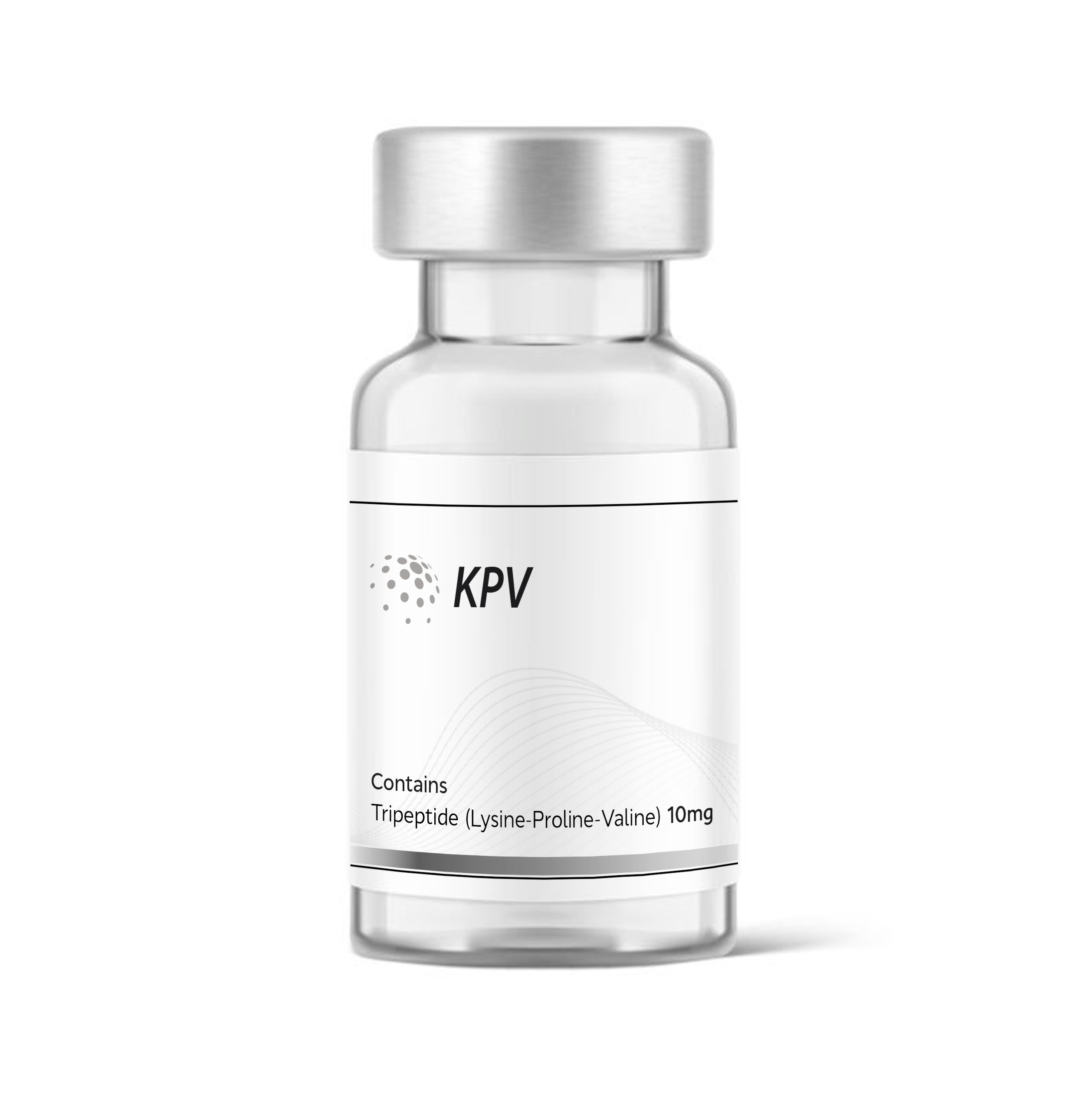
KPV 10mg
| # | Key point |
|---|---|
| 1 | Potent anti‑inflammatory peptide – blocks NF‑κB activation and markedly reduces production of TNF‑α, IL‑1β, IL‑6 and IL‑8 in a wide range of cell types. |
| 2 | Broad antimicrobial activity – disrupts bacterial membranes (Gram‑positive and Gram‑negative) and shows synergy with conventional antibiotics. |
| 3 | Accelerates wound repair – promotes keratinocyte migration, fibroblast proliferation and collagen deposition; useful in topical skin‑healing formulations. |
| 4 | Systemic metabolic effects – modest improvement of insulin sensitivity and glucose tolerance reported in murine diet‑induced obesity models. |
| 5 | Therapeutic niches under investigation – inflammatory bowel disease (IBD), dermatitis/psoriasis, acne, oral mucositis, sepsis‑associated inflammation, and chronic wound care. |
| 6 | Very low immunogenicity – being a native tripeptide, repeated dosing in animals does not elicit detectable anti‑KPV antibodies. |
| 7 | Delivery flexibility – stable enough for topical creams/ointments, nasal sprays, oral lozenges, and can be incorporated into hydrogel dressings; systemic delivery (IV/SC) is limited by rapid renal clearance. |
| 8 | Regulatory status – currently research‑grade only; no FDA‑approved drug product. |
Receptor Pharmacodynamics
| Aspect | Details |
|---|---|
| Primary target | Not a classic high‑affinity receptor; KPV exerts its effects mainly through modulation of intracellular signaling pathways (NF‑κB, MAPK) after cellular uptake. |
| Melanocortin‑receptor interaction | Weak agonism at MC‑1R has been reported, but the anti‑inflammatory actions are largely MC‑receptor independent. |
| Binding motif | The Lys side‑chain provides a positive charge that facilitates interaction with negatively charged phospholipid head groups, aiding membrane permeation and intracellular access. |
| Affinity | No high‑affinity receptor binding constant is reported; functional potency in vitro is typically IC₅₀ ≈ 0.5–5 µM for cytokine suppression. |
| Down‑stream blockade | Inhibits IκB kinase (IKK) → prevents IκB degradation → blocks NF‑κB nuclear translocation. Also attenuates p38 MAPK phosphorylation in some cell lines. |
| Selectivity | Selective for inflammatory signaling; does not appreciably affect cytokine receptors, growth factor receptors, or ion channels at therapeutic concentrations. |
| Feedback | No known feedback loop that up‑regulates endogenous α‑MSH or related peptides; the peptide is rapidly cleared, limiting prolonged systemic exposure. |
Down‑stream Biology
| Pathway | Functional outcome | Principal tissues / contexts |
|---|---|---|
| NF‑κB inhibition | ↓ transcription of pro‑inflammatory cytokines, chemokines, adhesion molecules | Immune cells (macrophages, neutrophils, dendritic cells), epithelial cells, endothelial cells |
| MAPK modulation | Reduced p38/ERK activation → lower stress‑induced apoptosis | Skin keratinocytes, intestinal epithelium |
| Antimicrobial membrane disruption | Rapid bactericidal activity via pore formation | Surface of skin, mucosal surfaces, wound exudate |
| Keratinocyte/fibroblast migration | ↑ re‑epithelialization, collagen synthesis | Dermal wound beds, oral mucosa |
| Metabolic signaling | ↑ GLUT4 translocation, improved insulin‑stimulated glucose uptake (observed in mouse adipocytes) | Skeletal muscle, adipose tissue |
| Neuro‑immune modulation | Minor reduction of microglial activation in CNS injury models | Brain, spinal cord (experimental) |
Pharmacokinetic Snapshot
| Parameter | Approximate value* | Comments |
|---|---|---|
| Formulations | Topical cream/gel (0.1–5 % w/w), nasal spray (0.5 % solution), oral lozenge (10 mg), hydrogel dressing (10 µg cm⁻²) | Peptide is chemically stable in neutral pH; protected from proteases when formulated in hydrogels or liposomes. |
| Absorption (topical) | Detectable epidermal levels within 30 min; systemic exposure < 5 % of applied dose. | |
| Absorption (intranasal) | Peak plasma ~10–20 min; bioavailability ≈ 15 % of dose. | |
| Half‑life | Plasma: 5–15 min (renal filtration of free peptide). Skin depot: 2–4 h (slow release from formulation). | |
| Distribution | Volume of distribution ≈ 0.2 L kg⁻¹ (primarily extracellular fluid). | |
| Metabolism | Rapid cleavage by serum peptidases to di‑/tripeptides; metabolites are inactive and renally excreted. | |
| Clearance | Linear clearance ≈ 0.8 L h⁻¹ kg⁻¹ (plasma). | |
| Special PK notes | Repeated topical dosing does not lead to accumulation; systemic dosing requires frequent administration (q6‑12 h) to maintain pharmacodynamic effect. |
Typical Dosing Paradigm
| Modality | Dose range (human) | Frequency | Indication (research focus) |
|---|---|---|---|
| Topical cream/ointment | 0.5 %–5 % w/w (≈ 5–50 mg cm⁻²) | Once‑daily to twice‑daily | Chronic wounds, psoriasis, acne, oral mucositis |
| Nasal spray | 0.5 mg dose (≈ 0.05 % solution) | 2 × /day | Allergic rhinitis, acute sinus inflammation |
| Oral lozenge | 10 mg dissolved slowly | 3 × day | Mild gastrointestinal inflammation, dyspepsia |
| Hydrogel dressing | 10 µg cm⁻² embedded | Single application, re‑apply every 48 h | Surgical wound, diabetic foot ulcer |
| IV bolus (investigational) | 0.1 mg kg⁻¹ | Every 6 h (continuous infusion) | Severe sepsis, cytokine storm (experimental) |
Dose selection is guided by achieving local concentrations of 0.5–5 µM in target tissue, which corresponds to the in‑vitro IC₅₀ for NF‑κB inhibition.
Safety & Tolerability
| Category | Observations |
|---|---|
| Local irritation | Mild erythema or itching reported in ≤ 10 % of topical applications; resolves spontaneously. |
| Systemic AEs | In IV/IV‑bolus studies, transient flu‑like symptoms (headache, mild fever) in ≤ 5 % of participants; no severe events. |
| Laboratory changes | No clinically relevant alterations in CBC, liver enzymes, or renal function in short‑term studies. |
| Immunogenicity | No anti‑KPV antibodies detected after repeated topical or oral dosing (up to 12 weeks). |
| Special populations | No data in pregnancy, lactation, pediatric (< 12 y) or severe hepatic/renal impairment; caution advised. |
| Drug‑interaction potential | Low; peptide is cleared renally and does not inhibit major CYP enzymes. |
| Long‑term concerns | Theoretical risk of excessive immune suppression if used chronically at high systemic levels; ongoing monitoring in longer trials. |
Comparative Safety & Practical Matrix
| Feature | KPV | BPC‑157 | TB‑500 (Thymosin β‑4) | GHK‑Cu | PEG‑MGF |
|---|---|---|---|---|---|
| Primary mechanism | NF‑κB / antimicrobial membrane disruption | Multi‑growth‑factor‑like (VEGF/FGF) | Actin‑polymerisation & angiogenesis | Copper‑dependent collagen synthesis | IGF‑1‑derived muscle‑specific anabolic |
| Typical route | Topical, nasal, oral lozenge, hydrogel | Injectable (SC/IM) | Injectable (SC/IM) | Topical cream/serum | Subcutaneous injection |
| Dosing frequency | Daily (topical) or q6‑12 h (IV) | 2‑3 × /week | 2‑3 × week | BID‑daily | Weekly‑bi‑weekly |
| Onset of effect | Hours (anti‑inflammatory) – days (wound) | Days‑weeks (tissue repair) | Days (angiogenesis) | Days (skin remodeling) | Weeks (muscle hypertrophy) |
| Edema / water‑retention | Low | Low‑moderate | Low | Very low | Moderate |
| Glucose impact | Improves insulin sensitivity (pre‑clinical) | Neutral | Neutral | Neutral | Neutral |
| Regulatory status | Research‑grade only | Research‑grade | Research‑grade | Cosmetic‑grade (some markets) | Research‑grade |
| WADA | Not prohibited | Not prohibited | Not prohibited | Not prohibited | Not prohibited |
Practical Take‑Home Points
- KPV is a tiny, naturally occurring tripeptide that delivers strong anti‑inflammatory and antimicrobial actions without engaging a classical high‑affinity receptor. Its primary pharmacology is intracellular inhibition of NF‑κB and membrane‑disruptive antimicrobial activity.
- Delivery is best suited to local/topical routes (creams, gels, hydrogel dressings) where therapeutic concentrations are achieved while systemic exposure remains minimal. Intranasal or oral lozenges are being explored for mucosal inflammation.
- Pharmacokinetics are short‑lived (minutes in plasma) → frequent dosing or sustained‑release formulations are required for systemic indications.
- Safety profile is excellent in early studies – only mild local irritation and transient flu‑like symptoms have been reported; no immunogenicity detected. Long‑term systemic safety still needs confirmation.
- Regulatory landscape: KPV remains an investigational peptide; no approved therapeutic product exists yet. Researchers can obtain research‑grade material for pre‑clinical work.
- Potential therapeutic niches include chronic wound care, inflammatory skin disorders (acne, psoriasis), IBD, and adjunct treatment for sepsis‑related cytokine storms.
- Compared with other regenerative peptides (BPC‑157, TB‑500, GHK‑Cu, PEG‑MGF), KPV is unique in its direct anti‑inflammatory/antimicrobial focus rather than broad tissue‑repair signaling, making it especially attractive where inflammation drives pathology.