
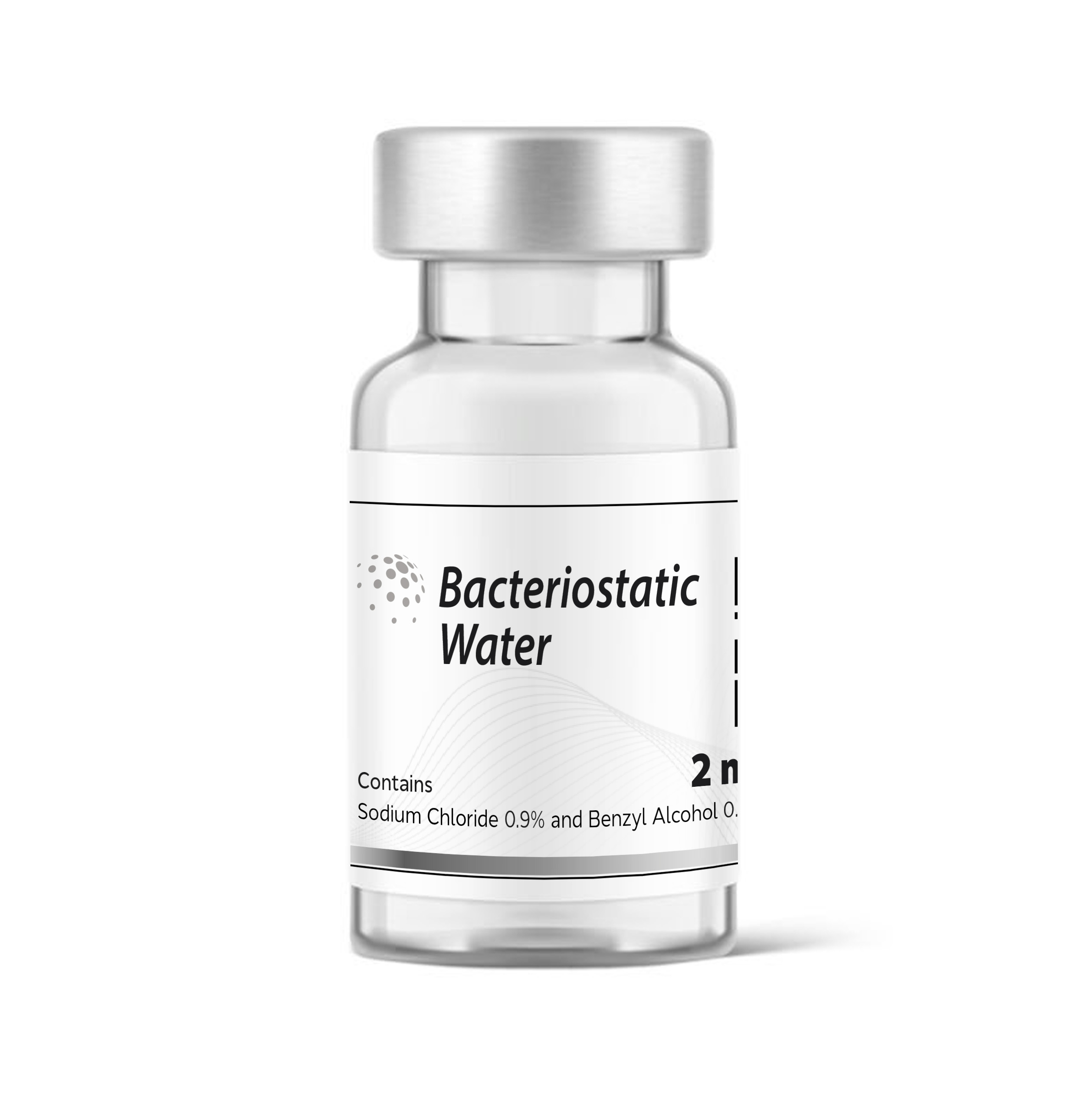
Description
Bacteriostatic Water Quick Reference Guide
What It Is
- Definition – Sterile water for injection that contains 0.9 % benzyl‑alcohol as a preservative.
- Purpose – Allows reconstituted lyophilized drugs (e.g., peptides, vaccines, hormones) to be stored at room temperature for up to 28 days without microbial growth.
- Formulation – 2 mL vial = sterile water + benzyl‑alcohol (0.9 %).
| # | Point |
|---|---|
| 1 | Preservative – Benzyl‑alcohol provides bacteriostatic activity (prevents bacterial proliferation). |
| 2 | Shelf‑life – Once opened, the solution remains usable for ≤ 28 days at ≤ 25 °C (room temp) if kept sealed. |
| 3 | Compatibility – Safe for most injectable peptides, hormones, and vaccines; do not use with drugs that are alkaline‑sensitive or where benzyl‑alcohol is contraindicated (e.g., neonates, intrathecal injections). |
| 4 | Administration – Intended only as a diluent; never injected alone. |
| 5 | Regulatory status – Classified as a sterile pharmaceutical excipient; FDA‑approved for parenteral use. |
| 6 | WADA – Not a prohibited substance (it’s an inert diluent). |
Pharmacodynamics
- Benzyl‑Alcohol binds to bacterial cell membranes, disrupting protein function and halting replication.
- The concentration (0.9 %) is bacteriostatic, not bactericidal – it stops growth but does not kill existing organisms.
- Human tissues tolerate this low level; systemic absorption is minimal because the volume used per injection is small (< 1 mL).
Pharmacokinetic Snapshot (Benzyl‑Alcohol Component)
| Parameter | Approx. Value* |
|---|---|
| Absorption | Rapid diffusion from injection site into plasma (if inadvertently injected). |
| Distribution | Widely distributed; low protein binding. |
| Metabolism | Primarily hepatic oxidation to benzoic acid → conjugated with glycine to form hippuric acid. |
| Elimination | Renal excretion of hippuric acid; half‑life ≈ 1–2 h. |
| Clearance | ~0.5 L/h (adult). |
*Values derived from adult pharmacology data for benzyl‑alcohol; the water component is inert.
Typical Use & Dosing
| Drug Type | Typical BW Volume | Reconstitution Example |
|---|---|---|
| Peptide (e.g., 5 mg lyophilized) | 1 mL – 5 mL per vial | Add 1 mL BW → 5 mg/mL solution. |
| Hormone (e.g., 100 IU hCG) | 0.5 mL – 2 mL | Add 0.5 mL BW → 200 IU/mL. |
| Vaccine (rare) | 0.5 mL – 1 mL | Follow manufacturer’s instructions. |
| Maximum single‑dose injection | ≤ 1 mL of BW‑reconstituted drug (unless the drug label permits larger volumes). |
Never inject BW alone; always combine with the intended active ingredient.
Safety & Tolerability
| Issue | Frequency / Severity | Comments |
|---|---|---|
| Injection‑site irritation | ≤ 5 % | Mild redness or pruritus; self‑limiting. |
| Systemic benzyl‑alcohol toxicity | Rare (high cumulative dose) | Symptoms: dizziness, nausea, CNS depression. Avoid large-volume or repeated intramuscular use. |
| Neonatal contraindication | Strong | Benzyl‑alcohol is contraindicated in newborns (risk of “gasping syndrome”). |
| Allergic reaction | Very rare | Anaphylaxis unlikely; stop use if severe rash or swelling occurs. |
| Compatibility issues | Drug‑specific | Some biologics (e.g., certain monoclonal antibodies) may be destabilized by alcohol; consult product labeling. |
Practical Tips
- Inspect the vial – Ensure it’s clear, colorless, and free of particles before use.
- Keep it sealed – After first puncture, store the vial upright at ≤ 25 °C; discard after 28 days.
- Label reconstituted syringes – Include drug name, concentration, and preparation date.
- Avoid intrathecal or intra‑arterial routes – BW is not approved for these administrations.
- Document benzyl‑alcohol exposure – In clinical notes, especially for pediatric or high‑risk patients.