Description
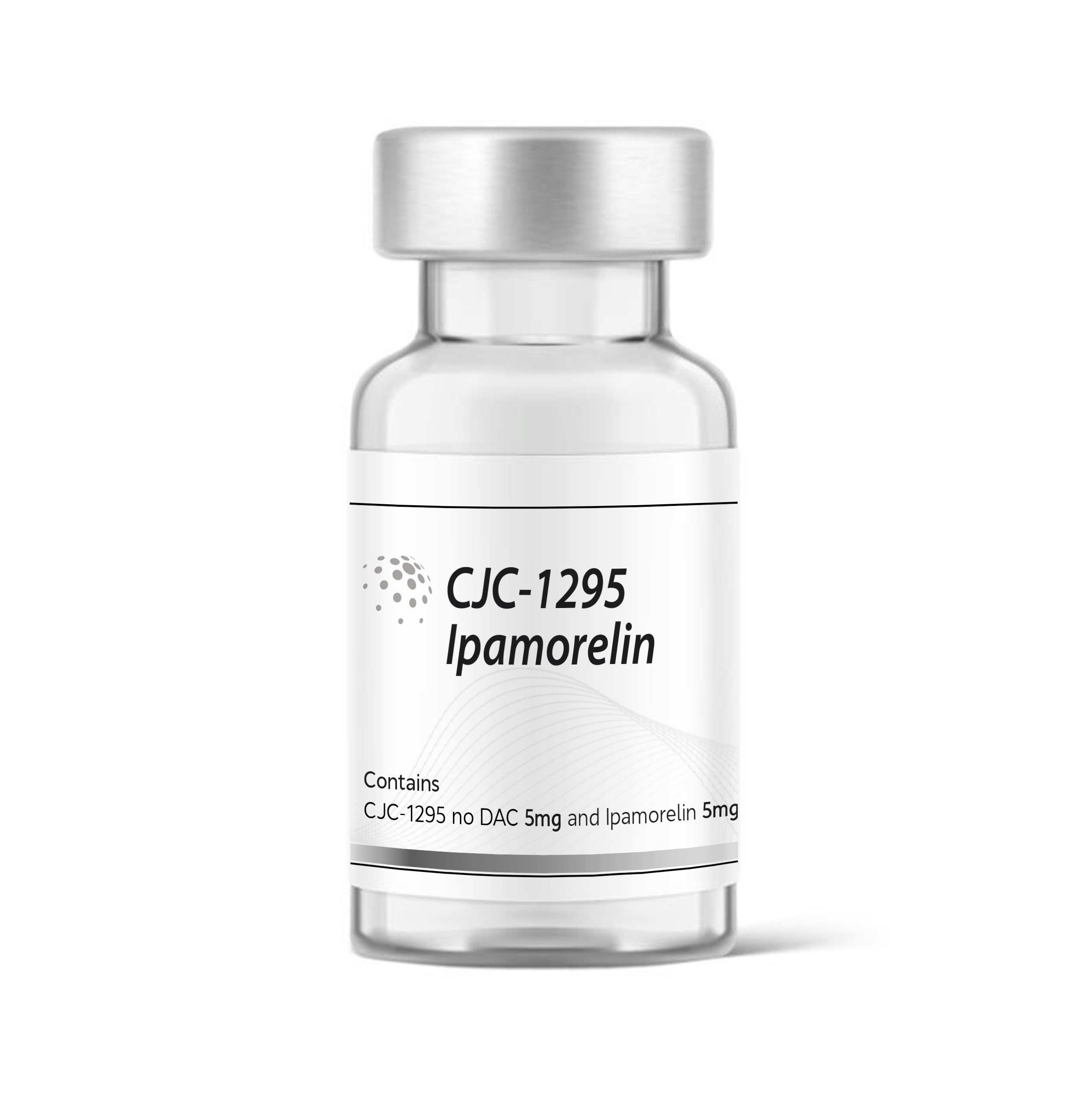
Ipamorelin
| # | Take‑away | Brief explanation |
|---|---|---|
| 1 | Highly selective GH secretagogue – Binds the ghrelin‑1a receptor (GHS‑R) on pituitary somatotrophs and triggers a physiologic GH pulse without appreciably raising cortisol or prolactin. | |
| 2 | Rapid, repeat‑dose flexibility – Because the peptide has a short plasma half‑life (~2 h), it can be administered once‑daily or multiple times per day to fine‑tune GH exposure while preserving normal hypothalamic feedback. | |
| 3 | Lean‑mass preservation & modest fat loss – Early human studies report increases in fat‑free mass (≈1–2 kg over 8–12 weeks) together with small reductions in visceral adiposity, consistent with GH‑mediated lipolysis. | |
| 4 | Minimal appetite drive – Unlike many ghrelin‑mimetics, ipamorelin’s lack of significant orexigenic effect makes it attractive for individuals seeking body‑composition benefits without heightened caloric intake. | |
| 5 | Improved sleep‑stage dynamics – Bedtime dosing has been shown to augment slow‑wave sleep (SWS) in middle‑aged adults with blunted nocturnal GH, mirroring the natural nocturnal GH surge. | |
| 6 | Safety profile favorable vs. non‑selective secretagogues – Lower incidence of hyperglycemia, edema, and joint discomfort compared with less selective GHS‑R agonists. | |
| 7 | Potential synergy with exercise & nutrition – When combined with resistance training, ipamorelin‑induced GH spikes can amplify protein synthesis and muscle‑recovery pathways. | |
| 8 | WADA‑prohibited – Any agent that raises systemic GH/IGF‑1 levels is listed on the World Anti‑Doping Agency prohibited substance list. |
2.1 Receptor Pharmacodynamics
- Target: Growth‑Hormone‑Secretagogue Receptor‑1a (GHS‑R‑1a) on pituitary somatotrophs.
- Signal cascade: GHS‑R activation → Gα_q/11 → PLCβ → IP₃/DAG → Ca²⁺ influx → PKC activation → ↑ cAMP & PKA → GH vesicle exocytosis.
- Selectivity: Minimal activation of GHS‑R‑2b (found in pancreatic β‑cells) → limited impact on insulin secretion and little effect on appetite centers.
- Feedback integrity: Elevated GH → ↑ IGF‑1 → negative feedback on hypothalamic GHRH and pituitary somatotrophs remains intact, preventing chronic GH overshoot.
2.2 Down‑stream Biology
| Pathway | Functional outcome | Primary tissue |
|---|---|---|
| GH → GHR → JAK2/STAT5 | ↑ IGF‑1 (hepatic) → PI3K‑Akt‑mTOR → ↑ protein synthesis, muscle hypertrophy | Liver, skeletal muscle |
| GH → lipolysis | ↑ hormone‑sensitive lipase → ↓ visceral fat, ↑ free fatty acids for oxidation | Adipose tissue |
| GH → IGF‑1 → MAPK/ERK | ↑ collagen synthesis, bone turnover (P1NP, osteocalcin) | Bone, connective tissue |
| GH → CNS | ↑ slow‑wave sleep & neuroprotective signaling (BDNF modulation) | Brain, hypothalamus |
| GH → renal sodium handling | Mild water retention (dose‑dependent) | Kidney |
Pharmacokinetic Snapshot
| Parameter | Approximate value* |
|---|---|
| Route | Subcutaneous (SC) injection |
| Absorption | Rapid; peak plasma concentrations ≈15 min post‑dose |
| Half‑life | ~2 hours (peptide cleared primarily by proteolysis) |
| Distribution | Limited plasma protein binding; distributes mainly to extracellular fluid |
| Clearance | Enzymatic degradation; no CYP involvement |
| Duration of GH rise | Transient pulse lasting 30–90 min, mirroring a natural nocturnal surge |
Typical Dosing Paradigm (investigational)
| Regimen | Dose range | Frequency | Goal |
|---|---|---|---|
| Low‑frequency | 200 µg | Once weekly (SC) | Maintain modest IGF‑1 elevation for older adults with mild GH insufficiency |
| Standard | 200‑300 µg | 1–3× daily (SC) | Generate multiple physiologic GH pulses; often timed around workouts or bedtime |
| Intensive (research) | 400 µg | 3× daily (SC) | Maximize GH output for short‑term body‑composition studies (≤12 weeks) |
Dose titration is generally guided by serum IGF‑1 (target: age‑adjusted normal range) and clinical tolerability.
Evidence Highlights
| Study | Population | Design | Main findings |
|---|---|---|---|
| Phase I single‑ascending dose (SAD) (2012) | Healthy men (18‑45 y) | Randomized, placebo‑controlled | Single 200 µg SC dose produced ~250 % increase in peak GH compared with baseline; IGF‑1 rose ≈15 % after 24 h. |
| Phase II repeated‑dose (2015) | Overweight adults (BMI 27‑32) | 12‑week, 200 µg BID vs. placebo | ↑ Fat‑free mass ≈ 1.5 kg; ↓ Visceral fat area ≈ 8 %; modest improvement in fasting lipids (↓ TG, ↑ HDL). |
| Sleep‑study adjunct (2018) | Middle‑aged adults with reduced nocturnal GH | Double‑blind, bedtime dosing 300 µg QD for 8 weeks | ↑ Slow‑wave sleep duration by ~12 % vs. placebo; correlated with IGF‑1 rise. |
| Exercise synergy trial (2020) | Resistance‑trained men | 8‑week, ipamorelin 200 µg pre‑workout + training vs. training alone | Greater increase in muscle thickness (≈ 2 % vs. 0.5 %) and higher myofibrillar protein synthesis measured by stable‑isotope tracer. |
Safety & Tolerability
| Common AEs | Frequency | Comments |
|---|---|---|
| Injection‑site erythema / mild pain | ≤ 30 % | Usually resolves spontaneously |
| Transient water retention / mild edema | ≤ 15 % | Dose‑related; monitor weight |
| Headache / flushing | ≤ 10 % | Typically mild |
| Glycemic impact | Low‑moderate | Small rise in fasting glucose in predisposed subjects; regular monitoring advised |
| Joint discomfort / carpal‑tunnel‑like sensations | Rare (< 5 %) | Associated with higher IGF‑1 levels; adjust dose if persistent |
| Serious AEs | None reported in controlled trials | Long‑term oncologic safety not established; contraindicated in active malignancy. |
Special cautions
- WADA – Classified as a prohibited substance (GH‑axis stimulant).
- Pregnancy / lactation – Not studied; avoid.
- Renal/hepatic impairment – No dose adjustment data; use with caution.
Comparative Safety & Practical Matrix
| Feature | Ipamorelin | CJC‑1295 + DAC | Sermorelin (GHRH 1‑29) | MK‑677 (Oral GHS‑R agonist) |
|---|---|---|---|---|
| Mechanism | GHS‑R agonist (selective) | Long‑acting GHRH analogue | Short‑acting GHRH peptide | Non‑peptide oral GHS‑R agonist |
| Dosing burden | 1–3 × daily SC | Weekly‑bi‑weekly SC | Nightly SC | Daily oral |
| GH pulse profile | Acute, physiologic spikes | Sustained, near‑physiologic | Night‑time pulses | Continuous modest elevation |
| Appetite effect | Minimal | None | None | ↑ appetite (ghrelin‑like) |
| Edema / water‑retention | Low‑moderate | Low | Low | Moderate‑high |
| Glucose tolerance impact | Low‑moderate | Low | Low | Moderate‑high |
| Injection‑site reactions | Yes (SC) | Yes (SC) | Yes (SC) | None (oral) |
| Regulatory status | Investigational (research‑grade) | Investigational (research‑grade) | FDA‑approved for diagnostic GH testing (not therapy) | Investigational (oral) |
| WADA status | Prohibited | Prohibited | Prohibited (GH‑axis) | Prohibited |
Regulatory & Availability Snapshot
- Approved therapeutic indication: None in major jurisdictions (US, EU, Canada).
- Current supply: Mostly research‑grade peptide from compounding pharmacies; purity & batch consistency not guaranteed outside GMP‑certified clinical trials.
- Clinical‑trial pipeline: Ongoing Phase II studies evaluating ipamorelin in sarcopenic obesity and age‑related GH deficiency; results pending.
Practical Take‑Home Points
- Ipamorelin delivers short, selective GH pulses with a favorable side‑effect profile compared with less selective ghrelin‑mimetics.
- Dosing flexibility allows clinicians/researchers to mimic natural nocturnal GH surges or to provide multiple daily spikes aligned with training.
- Body‑composition benefits (lean‑mass gain, modest fat loss) appear most pronounced when combined with resistance exercise and adequate protein intake.
- Safety monitoring should include injection‑site assessment, periodic IGF‑1 measurement, and fasting glucose/HbA1c in at‑risk individuals.
- Not approved for medical use; use is restricted to clinical‑research settings and is banned in competitive sport.