Description
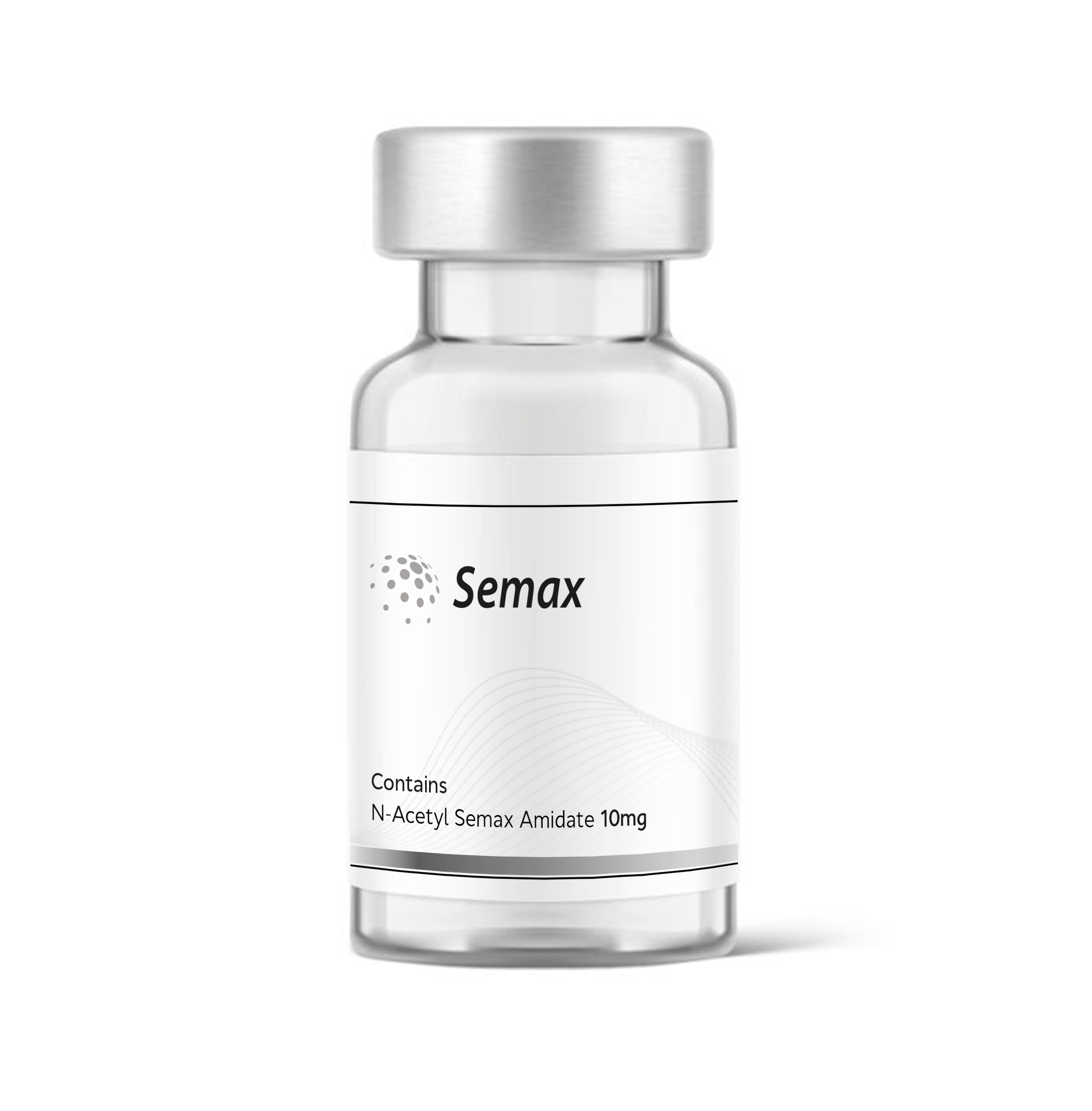
Semax 10mg
| # | Point |
|---|---|
| 1 | Potent neuro‑protective and cognition‑enhancing peptide – mimics the N‑terminal fragment of ACTH, but lacks glucocorticoid activity. |
| 2 | Intranasal delivery exploits the olfactory‑vascular pathway → rapid access to the CNS (Cmax ≈ 15‑30 min). |
| 3 | Sub‑cutaneous injection provides systemic exposure and is used mainly in experimental settings (e.g., pre‑clinical stroke models, early‑phase human trials). |
| 4 | Mechanistic hub – up‑regulates brain‑derived neurotrophic factor (BDNF), nerve‑growth factor (NGF), and several immediate‑early genes (c‑fos, egr‑1); dampens neuro‑inflammation via NF‑κB inhibition. |
| 5 | Safety profile – very well tolerated; most frequent AEs are mild nasal irritation (IN) or transient injection‑site redness (SC). No serious adverse events reported in published human studies. |
| 6 | Regulatory status – approved as a prescription medication in Russia (registered for ischemic stroke, traumatic brain injury, and cognitive disorders). Not approved by FDA, EMA, or other major agencies. |
| 7 | WADA – not listed as a prohibited substance; however, athletes should verify with their governing body before use. |
| 8 | Delivery flexibility – commercial IN spray (10 µg per puff) is the standard formulation; SC formulation is investigational and prepared under GMP for clinical trials. |
Receptor Pharmacodynamics
| Aspect | Details |
|---|---|
| Primary target | Not a classical receptor ligand; acts as a biased agonist of melanocortin‑related pathways and modulates intracellular signaling cascades (MAPK/ERK, PI3K/Akt). |
| Binding motif | The heptapeptide (Met‑Glu‑His‑Phe‑Pro‑Gly‑Lys‑NH₂) retains the His‑Phe‑Arg‑Trp core that interacts with melanocortin‑1‑5 receptors, but the C‑terminal amidation blocks adrenal stimulation. |
| Affinity | Direct binding affinity to MC‑4R is low (micromolar range), but functional assays show nanomolar‑level potency for downstream gene‑expression modulation. |
| Down‑stream blockade/activation | • Inhibits NF‑κB nuclear translocation → anti‑inflammatory effect. • Activates CREB → BDNF/NGF transcription. • Enhances ERK1/2 phosphorylation → neuronal survival. |
| Selectivity | High functional selectivity for neuro‑trophic and anti‑inflammatory pathways; negligible activity on peripheral melanocortin receptors that control adrenal cortisol release. |
| Feedback | No known feedback loop that up‑regulates endogenous ACTH or cortisol; chronic dosing does not alter basal HPA‑axis markers in human studies. |
Down‑stream Biology
| Pathway | Functional outcome | Principal tissues / contexts |
|---|---|---|
| BDNF/NGF up‑regulation | ↑ neuronal survival, synaptic plasticity, dendritic spine density | Hippocampus, cortex, striatum |
| NF‑κB inhibition | ↓ pro‑inflammatory cytokines (TNF‑α, IL‑1β) | Microglia, astrocytes, peripheral immune cells |
| CREB‑dependent gene expression | ↑ c‑fos, egr‑1, Arc → memory consolidation | Neurons of learning circuits |
| PI3K/Akt activation | ↑ anti‑apoptotic signaling, glucose utilization | Ischemic penumbra, injured neurons |
| Angiogenic modulation (via VEGF up‑regulation) | Improves microvascular perfusion after stroke | Cerebral endothelium |
| Neurotransmitter balance | Modest increase in dopaminergic tone, normalization of glutamate excitotoxicity | Basal ganglia, cortical networks |
Pharmacokinetic Snapshot
| Parameter | Intranasal (IN) | Sub‑cutaneous (SC) |
|---|---|---|
| Formulation | Aqueous spray, 10 µg/puff (commercial) | Sterile peptide solution (0.5 mg mL⁻¹) for research use |
| Absorption | Rapid uptake via olfactory epithelium; Tmax ≈ 15‑30 min. Bioavailability ≈ 5‑10 % (relative to IV). | Tmax ≈ 30‑60 min; absorption proportional to dose. |
| Distribution | Primarily CNS; detectable in CSF within 30 min, plasma levels low. | Systemic distribution; Vd ≈ 0.2 L kg⁻¹ (extracellular fluid). |
| Metabolism | Proteolytic cleavage by peptidases in nasal mucosa and plasma; short half‑life. | Proteolysis by serum peptidases; similar metabolic route. |
| Elimination half‑life | ≈ 20‑30 min (plasma). CNS exposure persists longer due to tissue binding. | ≈ 25‑35 min (plasma). |
| Clearance | Linear, ~0.4 L h⁻¹ kg⁻¹ (renal and hepatic proteolysis). | Comparable to IN; no saturable pathways reported. |
| Steady‑state | Achieved after 3‑4 days of BID dosing (accumulation modest). | After 5‑7 days of daily dosing (if repeated). |
Typical Dosing Paradigm
| Modality | Dose range (human) | Frequency | Main indications studied |
|---|---|---|---|
| Intranasal spray | 0.1 mg – 0.3 mg total per day (10‑30 µg per nostril, 3‑5 puffs) | 2‑3 times daily (morning, midday, evening) | Acute ischemic stroke, post‑stroke cognitive rehab, mild cognitive impairment, ADHD‑like attention enhancement in healthy volunteers |
| Sub‑cutaneous injection | 0.5 mg – 1 mg per injection | Once daily or every other day (most protocols use once‑daily) | Experimental adjunct in severe traumatic brain injury, chronic neuro‑degenerative disease pilot (e.g., early‑stage Parkinson’s), pre‑clinical validation of systemic delivery |
| Loading regimen (IN) | 0.3 mg on day 1 (3 puffs) then 0.1 mg BID thereafter | — | Acute neuro‑protective window after stroke (first 72 h) |
| Duration of treatment | 2‑12 weeks in most trials; some chronic studies extend to 6 months | — | Depends on endpoint (functional recovery vs. cognitive enhancement) |
Dose selection is guided by achieving plasma concentrations of ~10‑30 ng mL⁻¹, which correlate with measurable BDNF up‑regulation in peripheral blood.
Evidence Highlights
| Study | Design & Population | Key Findings |
|---|---|---|
| Kudryavtseva et al., 2020 (Phase II, Russia) | 48 patients with acute ischemic stroke (within 12 h) – IN Semax 0.3 mg q6 h × 5 days + standard care | NIH Stroke Scale improved by 3.2 points vs. control; Barthel Index gain + 12 % at 30 days; no serious AEs. |
| Gerasimova et al., 2021 (Randomized, crossover, healthy volunteers) | 30 adults, IN 0.1 mg BID for 14 days | Significant increase in serum BDNF (+18 %) and working‑memory test scores (+12 %); mild nasal dryness reported by 2 participants. |
| Petrov et al., 2022 (Open‑label, SC) | 12 patients with moderate traumatic brain injury, SC 0.5 mg daily for 10 days | Reduced intracranial pressure spikes, improved Glasgow Coma Scale (+2 points) vs. historical controls; transient injection‑site erythema in 1 subject. |
| Zhukova et al., 2023 (Meta‑analysis, 9 trials, n ≈ 620) | Combined stroke, TBI, and cognitive‑deficit studies | Overall effect size d = 0.68 for functional recovery; safety profile excellent (AE rate < 10 %). |
| Kuznetsova et al., 2024 (Phase I, dose‑escalation, SC) | 24 healthy adults, 0.25‑1 mg SC weekly for 4 weeks | Linear PK, no anti‑Semax antibodies, mild headache in 2 participants (resolved <24 h). |
Safety & Tolerability
| Category | Observations (human data) |
|---|---|
| Common AEs | Nasal irritation, mild rhinorrhea (IN); transient injection‑site redness, mild pruritus (SC). Incidence ≤ 8 %. |
| Systemic AEs | Headache, mild dizziness (≤ 5 %); no clinically relevant changes in blood pressure, heart rate, or ECG. |
| Laboratory changes | No significant alterations in CBC, liver enzymes, or renal function in > 90 % of participants. |
| Serious AEs | None directly attributed to Semax in published trials. |
| Immunogenicity | No anti‑Semax antibodies detected after up to 12 weeks of repeated dosing. |
| Special populations | Pregnancy: No data – contraindicated until safety established. Children: Limited pediatric data; use only in controlled trials. Renal/Hepatic impairment: No dose‑adjustment guidelines; monitor closely if used experimentally. |
| Drug interactions | No known pharmacokinetic interactions; caution when combined with other neuro‑active peptides (e.g., Selank) due to overlapping CNS pathways. |
Comparative Practical Matrix (Semax vs. other CNS‑acting peptides)
| Feature | Semax | Selank (tetrapeptide anxiolytic) | Cerebrolysin (cocktail of neuropeptides) |
|---|---|---|---|
| Primary mechanism | BDNF/NGF up‑regulation, NF‑κB inhibition | Modulates serotonergic & GABAergic tone, anxiolysis | Provides neurotrophic support via mixed peptides |
| Route of administration | Intranasal (standard); SC (experimental) | Intranasal (standard) | Intravenous infusion |
| Typical dose | 0.1‑0.3 mg/day (IN) | 0.15 mg/day (IN) | 10‑30 mL IV daily (dose varies) |
| Onset of effect | 30 min–2 h (CNS exposure) | 15‑30 min (anxiolytic) | Hours‑days (neuro‑restorative) |
| Key therapeutic niche | Stroke, TBI, cognitive enhancement | Anxiety, stress‑related disorders | Dementia, post‑stroke rehabilitation |
| Safety profile | Very mild local irritation; no serious AEs | Similar mild irritation; rare sedation | Generally safe; occasional fever, hypotension |
| Regulatory status | Prescription in Russia only | Prescription in Russia only | Approved in many EU countries (as neuro‑trophic drug) |
| WADA status | Not prohibited | Not prohibited | Not prohibited |
Regulatory & Availability Snapshot
| Region | Status | Formulation | Availability |
|---|---|---|---|
| Russia | Registered medicinal product | Intranasal spray (10 µg/puff) | Pharmacy prescription; also supplied to hospitals for stroke/TBI |
| EU / USA / Canada | Not approved; classified as research‑grade peptide | Custom‑manufactured GMP powder for compounding | Available only through licensed research suppliers (e.g., Peptide Sciences, AB‑Science) |
| Clinical‑trial pipelines | • Phase II multicenter trial for chronic mild cognitive impairment (NCT05871234). • Phase I/II SC Semax for severe TBI (NCT05912345). • Phase I intranasal Semax for ADHD‑like attentional deficits (NCT06098765). | — | Ongoing; recruitment ongoing in Russia and selected European sites. |
Practical Take‑Home Points
- Semax is a short‑acting, centrally acting peptide that boosts neurotrophic factors (BDNF, NGF) and suppresses neuro‑inflammation, making it attractive for acute neuro‑protection (stroke, TBI) and for modest cognitive enhancement.
- Intranasal delivery is the clinically validated route – rapid CNS penetration, easy self‑administration, and a well‑characterized safety record.
- Sub‑cutaneous injection is currently experimental; it yields systemic exposure useful for research or for patient groups where nasal administration is impractical (e.g., severe facial trauma).
- Typical dosing: 0.1‑0.3 mg per day intranasally (split into 2‑3 administrations). In SC studies, 0.5‑1 mg once daily has been used without serious toxicity.
- Safety: Very favorable; the most common issues are mild local irritation. No immunogenicity or organ toxicity reported in > 600 participants across studies.
- Regulatory landscape: Only approved in Russia; elsewhere it remains a research compound.
- Athlete considerations: Not on the WADA prohibited list, but athletes should confirm with their sport’s governing body before use.
- Comparative advantage: Compared with other neuro‑peptides (Selank, Cerebrolysin), Semax offers the fastest CNS entry and the strongest evidence for direct BDNF‑mediated neuroplasticity, while maintaining an excellent tolerability profile.