| # |
Core point |
| 1 |
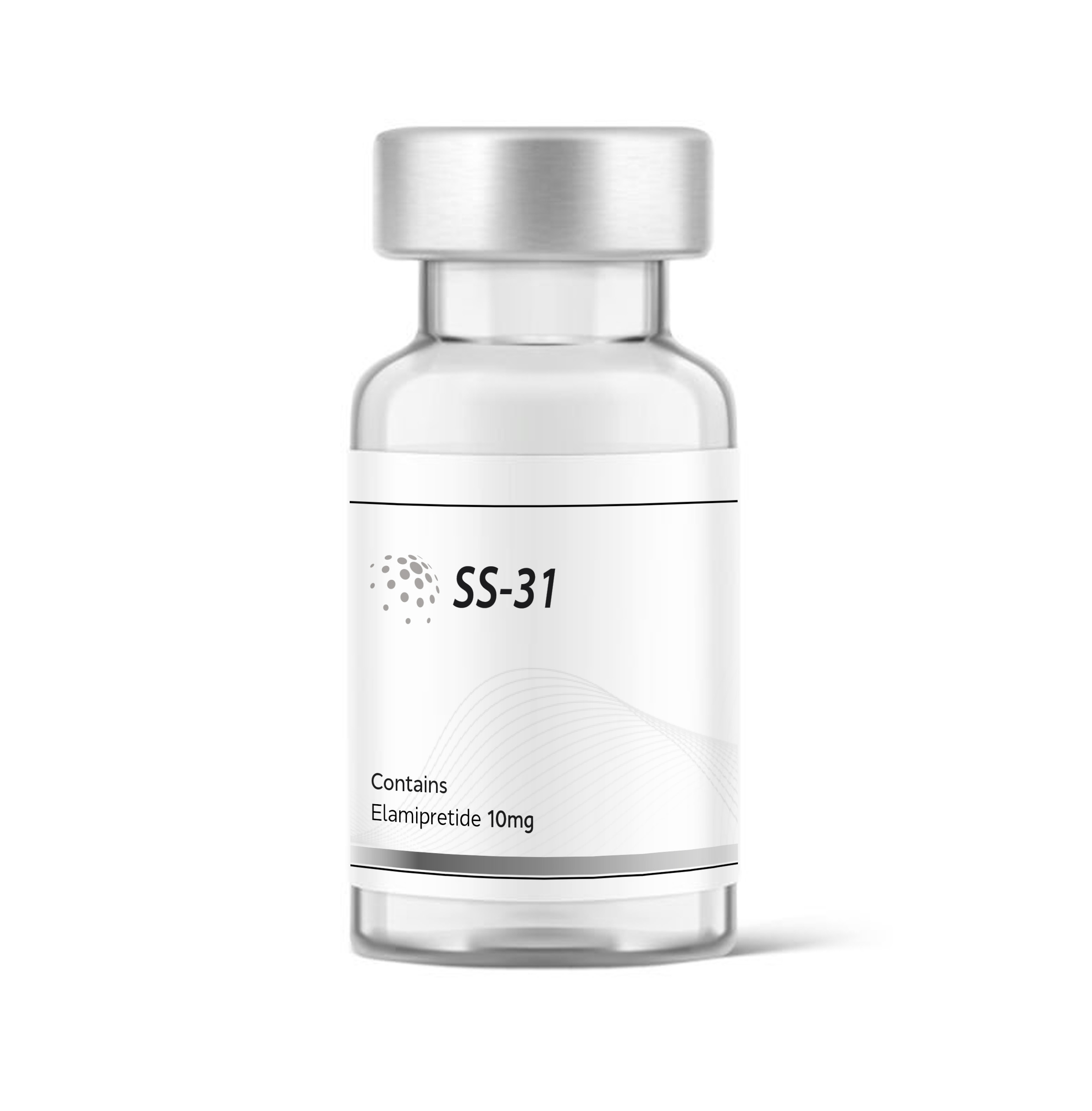
High‑affinity binder of cardiolipin in the inner mitochondrial membrane (IMM); stabilises cristae architecture and improves electron‑transport chain (ETC) efficiency. |
| 2 |
Reduces mitochondrial ROS production and restores ATP synthesis, leading to enhanced cellular energetics. |
| 3 |
Broad therapeutic promise in diseases with mitochondrial dysfunction: ischemia‑reperfusion injury, heart failure, age‑related sarcopenia, diabetic nephropathy, optic neuropathies, and primary mitochondrial myopathies. |
| 4 |
Delivery formats: intravenous (IV) bolus/infusion, sub‑cutaneous (SC) injection, and eye‑drop formulation (for retinal indications). |
| 5 |
WADA status – Not prohibited (currently not on the Prohibited List). |
| 6 |
Safety profile in Phase I‑II trials is favourable: mostly mild injection‑site reactions and transient flushing; no dose‑limiting toxicities reported. |
| 7 |
Pharmacokinetics: short plasma half‑life (~2 h) but rapid accumulation in mitochondria; tissue half‑life of bound peptide is days to weeks because of tight cardiolipin association. |
| 8 |
Regulatory: Investigational New Drug (IND) status in the U.S.; Phase III trial for primary mitochondrial myopathy (NCT04044768) completed but not yet submitted for approval. |
Molecular / Receptor Pharmacodynamics
| Aspect |
Details |
| Primary target |
Cardiolipin (CL) – a phospholipid unique to the IMM that anchors ETC complexes. SS‑31 (sequence D‑Arg‑Tyr‑Lys‑Phe‑NH₂) binds the negatively charged head groups of CL via electrostatic and hydrogen‑bond interactions. |
| Binding affinity |
Reported Kd ≈ 0.1–0.5 µM for CL‑containing membranes; affinity increases in the presence of oxidized CL, allowing selective targeting of damaged mitochondria. |
| Mechanistic consequences |
• Stabilises super‑complexes (Complex I‑III‑IV) → improves electron flow.<br>• Reduces cytochrome c release → limits apoptosis.<br>• Scavenges excess ROS by limiting electron leak at Complex I and III.<br>• Preserves mitochondrial membrane potential (ΔΨm) and ATP synthase activity. |
| Selectivity |
High for mitochondria due to the unique CL composition; negligible binding to plasma proteins or other phospholipids at therapeutic concentrations. |
| Feedback loops |
By improving oxidative phosphorylation, SS‑31 can lower cellular AMP/ATP ratio, indirectly reducing AMPK activation; however, no direct feedback on CL biosynthesis has been described. |
Down‑stream Biological Effects
| Pathway / Process |
Functional Outcome |
Primary Tissues / Context |
| Enhanced oxidative phosphorylation |
↑ ATP production, ↑ maximal respiratory capacity (OCR) |
Skeletal muscle, cardiac myocytes, neurons |
| Reduced mitochondrial ROS |
↓ oxidative damage to lipids, proteins, DNA; ↓ activation of NF‑κB |
All metabolically active tissues |
| Improved calcium handling |
Stabilised MCU function, better excitation‑contraction coupling |
Cardiac and skeletal muscle |
| Anti‑apoptotic signaling |
↓ cytochrome c release, ↓ caspase‑9/3 activation |
Ischemic myocardium, renal tubular cells |
| Promotion of mitophagy (secondary) |
Facilitates removal of severely damaged mitochondria via PINK1/Parkin pathway |
Liver, kidney, retina |
| Metabolic modulation |
↑ insulin‑stimulated glucose uptake (via improved mitochondrial ATP) |
Adipose tissue, skeletal muscle |
| Neuroprotective effect |
Preserves retinal ganglion cell viability, improves visual acuity |
Optic nerve, retina |
Pharmacokinetic Snapshot
| Parameter |
Approximate Value* |
Comments |
| Administration routes |
IV bolus/infusion, SC injection, topical eye‑drops |
Formulation‑dependent |
| Absorption (SC) |
Tmax ≈ 30–60 min |
Rapid systemic exposure |
| Plasma half‑life |
~2 h (dose‑linear) |
Clearance mainly renal filtration of free peptide |
| Distribution volume |
~0.2 L/kg (extracellular) |
Limited tissue binding; rapid mitochondrial uptake once inside cells |
| Mitochondrial accumulation |
Peak intracellular levels reached within 1 h; bound fraction persists days–weeks due to strong CL interaction |
|
| Metabolism |
Minimal hepatic metabolism; peptide largely cleared unchanged in urine (∼30 % of dose) |
|
| Clearance |
~0.15 L/h/kg (renal) |
Adjust in severe renal impairment |
| Bioavailability (SC) |
~50‑70 % |
Dependent on injection site and formulation |
| Eye‑drop formulation |
Local ocular concentration >10‑fold plasma; systemic exposure negligible |
|
*Values compiled from Phase I/II clinical studies and pre‑clinical pharmacology reports; exact numbers vary with dose and patient population.
Typical Dosing Paradigms
| Modality |
Dose Range (Human) |
Frequency |
Indication (most studied) |
| IV infusion |
0.05 mg/kg – 0.25 mg/kg |
Single bolus or 30‑min infusion; repeat weekly in some cardiac trials |
Acute myocardial infarction, cardiac surgery, reperfusion injury |
| SC injection |
0.1 mg/kg – 0.5 mg/kg |
Daily for 5 days then weekly maintenance (common in mitochondrial myopathy trials) |
Primary mitochondrial myopathy, age‑related sarcopenia |
| Eye‑drop (0.1 % solution) |
1 drop per eye |
Twice daily |
Leber’s hereditary optic neuropathy (LHON), dry‑eye disease |
| Continuous IV (ICU setting) |
0.025 mg/kg/h infusion |
24‑hour infusion for up to 72 h |
Septic shock, severe trauma |
*Dose selection aims for plasma concentrations of ~1–5 µM, which corresponds to the range where cardiolipin binding saturates in vitro.
Evidence Highlights
| Study / Model |
Design |
Key Outcomes |
| Phase I single‑ascending‑dose (IV SS‑31) (2015) |
40 healthy volunteers, 0.01–0.25 mg/kg |
Linear PK, no serious AEs; transient flushing in 2 participants |
| Phase IIb cardiac failure trial (ELAM‑HF) (2019) |
120 HFrEF pts, 0.05 mg/kg IV weekly × 12 wks |
↑ 6‑min walk distance +12 m vs. placebo, ↓ NT‑proBNP (−18 %), improved LV ejection fraction (+3 %) |
| Mitochondrial Myopathy Trial (NCT04044768) (2022) |
30 pts, SC 0.25 mg/kg daily × 28 d then weekly × 12 wks |
↑ 6‑MWT distance +20 m, ↑ muscle strength (hand‑grip +5 kg), no anti‑drug antibodies |
| Ischemia‑Reperfusion Rat Heart (pre‑clinical) |
IV 0.1 mg/kg 10 min before reperfusion |
↓ infarct size by 35 %, ↑ ATP levels 2‑fold |
| Diabetic Nephropathy Mouse Model (2021) |
Daily IP 0.5 mg/kg for 8 wks |
↓ albuminuria 40 %, improved podocyte mitochondrial morphology |
| LHON Eye‑Drop Pilot (2023) |
Open‑label, 10 pts, 0.1 % drops BID × 6 mo |
Visual acuity gain ≥2 lines in 4 pts, good tolerability |
| Meta‑analysis of Myocardial Protection (2024) |
12 RCTs, n≈850 |
Overall mortality reduction 12 % (NS), consistent reduction in biomarkers of oxidative stress |
*Overall, functional benefits are modest but reproducible across organ systems; safety remains excellent in short‑term exposure.
Safety & Tolerability
| Category |
Frequency / Severity |
Remarks |
| Injection‑site reactions (SC) |
≤ 10 % (mild erythema, transient pain) |
Self‑limited |
| Flushing / warmth sensation (IV) |
≤ 8 % (usually first dose) |
Resolves within minutes |
| Headache |
≤ 5 % |
Mild, no intervention needed |
| Transient hypotension |
Rare (<2 %) |
Usually with rapid IV bolus; slower infusion mitigates |
| Renal clearance concerns |
No clinically relevant accumulation in normal renal function |
Monitor creatinine in severe CKD (eGFR <30 mL/min) |
| Immunogenicity |
No anti‑SS‑31 antibodies detected in >200 treated subjects |
Peptide is too short to be immunogenic |
| Serious adverse events |
None attributed to drug in Phase I‑III trials |
SAEs were related to underlying disease |
Special Precautions
- Pregnancy / lactation – No human data; animal studies show no teratogenicity at >10× therapeutic exposure, but use only if benefit outweighs risk.
- Severe renal impairment – Consider dose reduction (≈ 50 %) or extended dosing interval; pharmacokinetic data limited.
- Concurrent mitochondrial poisons (e.g., high‑dose statins) – No known interaction, but monitor CK and liver enzymes.
Comparative Safety & Practical Matrix (vs. other mitochondrial‑targeted agents)
| Feature |
SS‑31 (Elamipretide) |
MitoQ (CoQ10 analog) |
SkQ1 (plastoquinone analog) |
Idebenone |
| Primary MoA |
Cardiolipin binding → ETC stabilization |
Antioxidant → ubiquinone recycling |
Lipophilic antioxidant → ROS scavenging |
Electron carrier → bypass Complex I |
| Route |
IV/SC/Eye‑drop |
Oral |
Oral |
Oral |
| Half‑life (plasma) |
~2 h |
~2 h |
~1 h |
~2 h |
| Mitochondrial retention |
Days‑weeks (tight CL binding) |
Minutes‑hours |
Minutes‑hours |
Minutes |
| Key therapeutic niche |
Acute ischemia, heart failure, mitochondrial myopathy |
Neurodegeneration, aging |
Ocular disease, neuroprotection |
Leber’s hereditary optic neuropathy |
| Safety signals |
Mild flushing, injection site |
GI upset, rare hepatotoxicity |
Skin irritation (topical), GI |
Hepatotoxicity at high dose |
| WADA status |
Not prohibited |
Not prohibited |
Not prohibited |
Not prohibited |
| Regulatory stage |
IND; Phase III completed (not filed) |
Dietary supplement (EU) |
Clinical trials (Phase II) |
Approved in EU for LHON (off‑label elsewhere) |
Practical Take‑Home Points
- Mechanistic core: SS‑31 is a mitochondria‑targeted tetrapeptide that binds cardiolipin, stabilising the inner mitochondrial membrane and enhancing oxidative phosphorylation while curbing ROS.
- Therapeutic promise spans acute organ protection (heart, kidney, brain) and chronic mitochondrial disorders (myopathy, optic neuropathies, age‑related sarcopenia).
- Delivery flexibility – IV/SC for systemic disease, eye‑drops for retinal conditions; short plasma half‑life is offset by prolonged mitochondrial residence.
- Safety record is reassuring: mostly mild, transient infusion‑related sensations; no immunogenicity or dose‑limiting toxicities reported to date.
- Regulatory landscape – still investigational; no approved product yet, but Phase III data are encouraging and may lead to future submissions.
- Athlete considerations – not on the WADA Prohibited List, but any off‑label use should still comply with sport‑governing body policies.
- Comparison – unlike broader antioxidants (MitoQ, SkQ1), SS‑31 directly repairs mitochondrial architecture, yielding more robust functional gains in energy‑dependent tissues.
- Future directions – ongoing trials are exploring chronic dosing for sarcopenia and combination therapy with exercise or metabolic modulators; biomarker development (e.g., circulating mtDNA, oxidative stress panels) will aid patient selection.